
Views: 0 Author: Site Editor Publish Time: 2026-01-22 Origin: Site


Underground belt conveyors are essential in mining, construction, and other industries where material transport is needed in underground environments. These systems provide efficient, continuous, and cost-effective solutions for moving bulk materials through tunnels, mines, or underground construction sites. This guide explores how to use underground belt conveyors effectively, from installation to daily operation and maintenance.
An underground belt conveyor is a material handling system designed specifically for underground environments. Unlike conventional conveyors that operate on the surface, underground belt conveyors are engineered to operate within confined spaces, transporting materials through tunnels, mines, or other subterranean locations. These systems consist of a continuous belt that moves over rollers, driven by a motor and powered by an energy-efficient drive system.
Underground belt conveyors are commonly used in industries like mining, where they help to transport materials such as coal, minerals, and ores from extraction points to processing plants or stockpiles. The key benefit of these systems is that they enhance operational efficiency and reduce the labor and operational costs associated with manual material handling.
The successful operation of an underground belt conveyor relies on several components working in unison. Understanding these components is crucial for anyone operating or maintaining the system. Below are the core components of an underground belt conveyor.
The conveyor belt is the most critical component, as it is responsible for moving materials. The belt is typically made of durable materials like rubber, polyester, or PVC, which are resistant to wear and abrasion. The type of material used for the belt will depend on the material being conveyed (e.g., coal, ore, etc.), the environment, and the expected load.
The belt runs on rollers and is typically driven by a motor through a pulley system. The belt’s width, thickness, and strength must be chosen based on the volume and type of material it will carry.
Rollers (or idlers) are used to support the conveyor belt and allow it to move smoothly over the system. Rollers are typically positioned at regular intervals along the conveyor to maintain the belt’s tension and prevent sagging. They also help in reducing friction, allowing the belt to move more efficiently.
There are different types of rollers, including:
Carrying Rollers: These are positioned under the belt to support the material load.
Return Rollers: These support the belt on its return journey.
Impact Rollers: These are placed at areas where the material is loaded to absorb impact and reduce wear.
Pulleys are used to drive the conveyor belt, change its direction, and maintain tension. There are several types of pulleys:
Drive Pulley: The pulley that provides the driving force to move the belt.
Return Pulley: The pulley that supports the return journey of the belt.
Tail Pulley: The pulley at the end of the conveyor that helps guide the belt’s return.
Take-up Pulley: The pulley used to apply tension to the belt.
The drive system is the heart of the conveyor, responsible for powering the system. Typically, a motor coupled with a gearbox and coupling provides the driving force. The motor is usually powered by electricity, but in some remote areas, other energy sources may be used.
The drive system determines the speed of the belt, which in turn controls how quickly materials are moved. The system must be designed to handle the load of the conveyor and operate in the demanding underground environment.
Component | Function | Types | Material |
Conveyor Belt | Moves materials across the conveyor system. | Rubber, PVC, Polyester | Wear-resistant materials |
Rollers/Idlers | Support the belt and reduce friction. | Carrying, Return, Impact Rollers | Steel, Stainless Steel |
Pulleys | Drive the belt, change direction, and maintain tension. | Drive Pulley, Return Pulley, Tail Pulley, Take-up Pulley | Steel, Cast Iron |
Drive System | Powers the conveyor system and controls speed. | Electric motor, Gearbox | Depends on the motor and power type |
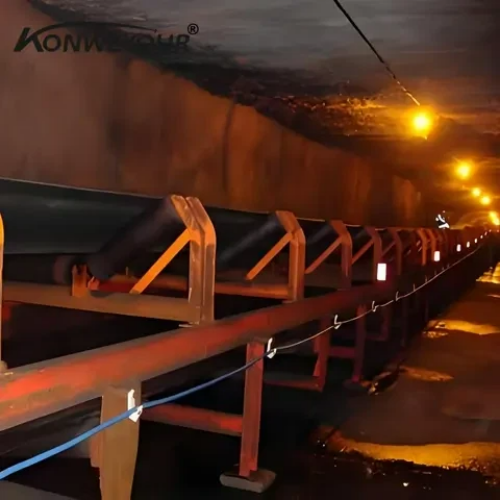
Proper operation of an underground belt conveyor requires careful attention to setup, startup, maintenance, and monitoring. Below are the key steps to ensure efficient and safe operation.
The installation of an underground belt conveyor involves several critical steps:
Tunnel Preparation: Ensure that the tunnel is wide and tall enough to accommodate the conveyor system. The tunnel should be free of obstacles and have enough space for maintenance access.
Belt Alignment: Proper alignment of the conveyor belt is essential to prevent excessive wear and ensure efficient material transport. The belt should be aligned so that it runs smoothly over the rollers and pulleys.
Roller and Pulley Setup: Install the rollers and pulleys along the conveyor path. Ensure that they are positioned to provide even support and maintain proper belt tension.
Key Considerations:
Conveyor length and material load.
Environmental factors such as temperature, humidity, and underground conditions.
Power supply and electrical requirements.
Before starting the conveyor system, it is crucial to:
Check Belt Tension: Ensure the belt has the correct tension to avoid slippage.
Inspect Rollers and Pulleys: Verify that rollers and pulleys are properly installed and lubricated to avoid wear.
Power On the System: Turn on the motor and drive system, slowly increasing the speed of the belt.
Once the system is running, observe the operation for any signs of misalignment, abnormal noise, or vibration. Regular monitoring ensures that the conveyor operates efficiently from the beginning.
Underground belt conveyors require regular monitoring to ensure smooth operation. Here’s what should be checked daily:
Belt Condition: Inspect the belt for wear, fraying, and damage.
Roller Operation: Ensure rollers are moving smoothly and are not obstructed.
Drive System: Check the motor and gearbox for proper operation and lubrication.
Safety Features: Ensure that emergency stops, guards, and warning lights are functioning correctly.
To ensure the long-term efficiency and safety of underground belt conveyors, the following best practices should be followed:
Proper load distribution is essential to avoid overloading the conveyor and causing excessive wear. Ensure that material is evenly spread across the belt to reduce the risk of blockage or breakdown.
It is important to keep the belt tensioned correctly. If the belt is too loose, it may slip, leading to inefficient operation. If it’s too tight, it can cause excessive wear and damage to the drive system. Regular checks and adjustments are necessary to maintain optimal tension.
To minimize wear, ensure that the material being conveyed is not overly abrasive or too heavy for the conveyor system. Use impact rollers and wear-resistant belts to reduce the risk of damage. Additionally, maintaining a clean and well-lubricated system can significantly extend the life of the conveyor.
Emergency Stops: Ensure that emergency stop systems are easily accessible and functioning properly.
Training: Operators should be trained in the safe operation of the conveyor system, including how to handle malfunctions and emergencies.
PPE: Workers should wear appropriate personal protective equipment, such as helmets, gloves, and safety boots.
Underground belt conveyors offer numerous advantages for material handling in challenging environments:
Underground belt conveyors provide a continuous and reliable means of transporting materials. This automation reduces the need for manual labor and helps streamline the production process.
By eliminating the need for trucks or manual labor, underground belt conveyors reduce operational costs. They are also highly energy-efficient, reducing electricity usage over time.
Underground belt conveyors minimize the need for workers to operate in hazardous environments. With the proper safety measures in place, conveyors can significantly reduce the risk of accidents and injuries.
Despite their robustness, underground belt conveyors may experience issues from time to time. Below are common problems and solutions:
Cause: Insufficient belt tension, excessive load, or material sticking to the belt.
Solution: Regularly check and adjust the belt tension. Clean the belt and rollers to remove any debris or buildup.
Cause: Misaligned rollers or pulleys, or a damaged belt.
Solution: Inspect and align rollers and pulleys. Replace damaged belts or components.
Cause: Overloaded motor or insufficient lubrication.
Solution: Ensure the motor is not overloaded, and lubricate moving parts regularly.
Underground belt conveyors are essential for efficient and safe material handling in challenging underground environments. By following best practices for setup, operation, and maintenance, operators can significantly enhance the lifespan and performance of these systems. At Hebei Konweyour Import and Export Co., Ltd., we understand the critical role that proper monitoring plays in ensuring smooth, reliable operation, especially in demanding conditions such as those found in mining and construction.
If you're looking to optimize your underground material transport systems or need expert advice on selecting and maintaining the right equipment, we are here to help. Our team offers tailored solutions designed to meet your specific operational needs, ensuring both efficiency and safety. We invite you to contact Hebei Konweyour Import and Export Co., Ltd. to explore how we can support your operations and provide high-quality underground belt conveyor systems suited to your industry.
Regular maintenance is essential to ensure long-term performance. Daily inspections should include checking belt tension, roller operation, and the drive system. More detailed maintenance should be done monthly.
Yes, underground belt conveyors are also used in construction, tunneling, and other industries where material transport is required in confined spaces.
Tunnel size, material type, load capacity, and environmental factors such as temperature and humidity are key considerations for installation.
Regular maintenance, proper tensioning, lubrication, and using impact-resistant rollers and wear-resistant belts can help extend the lifespan of the conveyor.
Operators should be trained in safety procedures, wear appropriate personal protective equipment (PPE), and ensure emergency stop systems are in place.


