
Views: 0 Author: Site Editor Publish Time: 2026-01-23 Origin: Site


Underground belt conveyors play an essential role in the mining, tunneling, and construction industries. These conveyors are designed to operate in challenging underground environments, transporting heavy and bulk materials efficiently and safely. In this article, we’ll delve into the significant advantages of underground belt conveyors, covering aspects such as efficiency, safety, cost-effectiveness, adaptability, and environmental benefits.
An underground belt conveyor is a specialized transport system designed to move materials such as coal, ore, and other minerals from one point to another within an underground mine or tunnel. Unlike traditional methods that rely on human labor or trucks, these conveyors offer a more continuous and efficient means of material transport.
Underground belt conveyors are critical in operations where space is limited and conditions are harsh. These systems can handle long distances and challenging terrains such as slopes, curves, and confined spaces, which makes them indispensable in the mining industry.
The purpose of this article is to explore the advantages of underground belt conveyors, highlighting their efficiency, flexibility, safety features, cost-effectiveness, and sustainability.
One of the most significant advantages of underground belt conveyors is their ability to provide continuous material transport in environments that are often harsh and challenging. Below are some key points highlighting the efficiency of underground belt conveyors:
Continuous Operation: Unlike traditional methods such as truck transport or manual labor, belt conveyors operate continuously, ensuring a smooth and uninterrupted flow of materials.
High Capacity: These conveyors can carry large amounts of material per hour, making them ideal for high-volume operations such as coal mining and mineral extraction.
Ability to Handle Heavy and Bulky Materials: Underground belt conveyors are built to withstand the weight of heavy materials like coal, ores, and aggregates, without risking damage to the system or the environment.
Feature | Underground Belt Conveyor | Traditional Methods |
Material Handling Capacity | High, continuous flow of large quantities | Limited capacity, often requires multiple trips |
Efficiency | Continuous, automated operation | Intermittent, manual labor-based |
Suitability for Heavy Loads | Can handle heavy materials like coal and ores | Trucks or manual labor may struggle with weight |
In underground operations, space is often a significant constraint. Underground belt conveyors are designed to be space-efficient, offering flexibility in how they can be integrated into existing mining infrastructure.
Narrow Profile: These conveyors are built to fit into confined spaces, navigating tight underground corridors without taking up much room. Their design allows for installation in narrow tunnels, making them ideal for mines with limited access.
Adaptability to Layouts: Underground belt conveyors can be customized to match the specific layout of a mine or construction site. This includes accommodating changes in elevation, navigating sharp curves, and working in areas with varying tunnel dimensions.
Space Consideration | Underground Belt Conveyor | Conventional Transport Methods |
Footprint | Small, can fit into tight underground spaces | Requires large equipment like trucks or loaders |
Navigating Curves | Customizable to handle curves and slopes | Challenging, often results in inefficiencies |
Flexibility | Easily adaptable to different layouts | Less adaptable to changing site conditions |
Safety is a top priority in underground operations. The use of underground belt conveyors significantly enhances safety and reduces the risks associated with manual material handling.
Automated Transport: By automating the process of material transport, belt conveyors reduce the need for workers to manually handle heavy and hazardous materials, thereby minimizing the risk of injury.
Reduced Exposure to Hazards: Underground work environments are often hazardous, with risks such as dust, fumes, and the possibility of equipment failures. Belt conveyors mitigate these risks by offering a safer, automated solution for material movement.
Efficiency: With the continuous operation of the belt conveyors, laborers are freed up from the heavy lifting and can focus on other essential tasks, improving overall operational efficiency.
Aspect | Underground Belt Conveyor | Manual Handling or Trucks |
Worker Safety | Significantly reduces physical strain | Higher risk of injury due to manual labor |
Exposure to Hazardous Conditions | Minimizes exposure to dust and dangerous environments | Increased exposure to mining hazards |
Labor Costs | Reduces need for large labor force | Higher labor costs and dependency on manual labor |
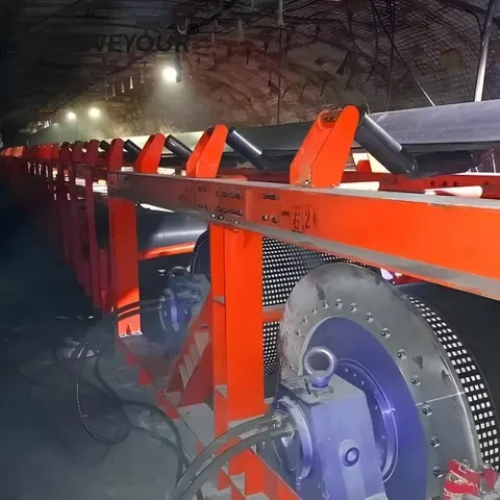
One of the standout features of underground belt conveyors is their ability to operate efficiently and continuously, ensuring the constant movement of materials from one point to another.
Continuous Operation: Belt conveyors can operate continuously, 24/7, making them ideal for high-demand environments like mines and construction projects. This continuous operation minimizes downtime, allowing for the seamless transport of materials at all times.
High Throughput: With the ability to handle large quantities of material at once, belt conveyors significantly increase throughput, making them much more efficient than intermittent, manual methods.
Minimized Interruptions: Unlike truck transport, which requires refueling and maintenance, underground belt conveyors experience fewer interruptions, ensuring consistent operation and reducing delays.
Efficiency Factor | Underground Belt Conveyor | Manual Methods / Trucks |
Operational Time | 24/7 continuous operation | Limited by human work hours or vehicle needs |
Material Throughput | High, continuous material transport | Often slower due to manual handling |
Downtime | Minimal, automated system | Frequent due to maintenance and breaks |
While underground belt conveyors may involve significant initial investment, they offer substantial long-term savings and provide a high return on investment (ROI).
Labor Cost Savings: By replacing manual labor and reducing the need for truck transport, underground belt conveyors significantly lower labor costs in the long run.
Low Maintenance Costs: When properly maintained, underground belt conveyors are durable and have a long operational life. Their maintenance costs are generally lower compared to other transport systems that require frequent repairs.
Fuel and Energy Efficiency: Unlike trucks, which rely on fuel, belt conveyors use electricity or other energy-efficient sources, reducing overall energy consumption.
Cost Factor | Underground Belt Conveyor | Traditional Transport Methods |
Labor Costs | Reduced, due to automation | Higher, due to manual labor needs |
Maintenance Costs | Low, durable and long-lasting systems | High, with frequent repairs and maintenance |
Energy Costs | Lower, typically electricity-based | High, due to fuel consumption |
Underground belt conveyors are highly versatile and can be customized to handle a variety of materials, making them suitable for diverse applications.
Handling Different Materials: These conveyors can be fitted with various types of belts to accommodate different materials, such as coal, ore, sand, gravel, and even liquids. Custom belts can be designed to handle materials with specific properties, like abrasiveness or moisture content.
Environment-Specific Adaptations: Depending on the underground conditions, the conveyor can be tailored to work in environments with specific challenges, such as wet conditions, high temperatures, or the presence of chemicals.
Material Type | Underground Belt Conveyor | Conventional Methods |
Bulk Materials | Ideal for bulk materials like coal, ore | Less efficient for handling large quantities |
Material Adaptability | Can be customized for different materials | Limited adaptability, especially for wet or abrasive materials |
Environmental sustainability is becoming increasingly important in the mining and construction industries. Underground belt conveyors offer several environmental advantages.
Less Reliance on Trucks: Traditional transport methods, such as trucks, rely heavily on fuel, contributing to high carbon emissions. Underground belt conveyors, however, run on electricity, reducing reliance on fossil fuels.
Less Dust and Noise: Belt conveyors produce less dust and noise compared to trucks, which helps improve working conditions and reduce the environmental impact of mining operations.
Sustainable Mining Practices: By reducing the need for truck transport, underground belt conveyors support more sustainable and environmentally friendly mining operations.
Environmental Factor | Underground Belt Conveyor | Diesel Trucks |
Carbon Emissions | Lower, primarily powered by electricity | High, fuel-based transport system |
Dust & Noise Pollution | Low, minimal impact on surroundings | High, contributes to air and noise pollution |
Sustainability | More sustainable, reduces fossil fuel use | Less sustainable, relies on fossil fuels |
Underground belt conveyors provide a wealth of benefits over traditional transport methods, including continuous material handling, superior space efficiency, and significant improvements in safety while reducing labor costs. These conveyors are not only cost-effective in the long term but also highly customizable to meet the specific needs of your operation. Additionally, they contribute to a more sustainable and environmentally friendly approach by minimizing emissions and reducing reliance on manual labor.
At Hebei Konweyour Import and Export Co., Ltd., we specialize in providing high-quality underground belt conveyor solutions designed to enhance operational efficiency and safety. By automating material transport, our systems ensure smoother and more reliable operations in underground mining and construction environments. Whether you're looking to improve productivity, reduce costs, or implement sustainable practices, our solutions are tailored to help you achieve your goals.
We invite you to contact us for more information on how our underground belt conveyors can transform your operations. Our team is here to support your needs and provide expert guidance every step of the way.
Q1: What industries use underground belt conveyors?
A1: Underground belt conveyors are primarily used in the mining industry, including coal, gold, and other mineral extraction sectors. They are also used in tunnel construction and other underground material handling projects.
Q2: How do underground belt conveyors improve safety?
A2: By automating the transport of materials, underground belt conveyors reduce the need for manual labor in hazardous underground environments, which helps prevent accidents, injuries, and exposure to dangerous conditions.
Q3: Can underground belt conveyors handle different types of materials?
A3: Yes, underground belt conveyors can be customized to transport a wide variety of materials, including coal, ore, sand, and other bulk goods. They are designed to accommodate diverse material types and operational conditions.
Q4: Are underground belt conveyors expensive to maintain?
A4: While the initial cost of installation may be high, underground belt conveyors are cost-effective in the long term. They require less maintenance compared to other systems, and their durability ensures fewer repairs and replacements over time.
Q5: How do underground belt conveyors contribute to environmental sustainability?
A5: Underground belt conveyors reduce reliance on diesel trucks, thereby cutting down on emissions, dust, and noise. Their use promotes cleaner, more sustainable mining and construction practices by minimizing the environmental footprint of material transport.


