
Views: 0 Author: Site Editor Publish Time: 2026-02-20 Origin: Site


Overland belt conveyors are pivotal systems in the bulk material handling industry, designed to efficiently move large quantities of material over long distances. These conveyors offer a robust solution for industries that require continuous material transport, especially in remote locations or large-scale industrial projects. In this article, we will explore the core purpose of overland belt conveyors, their key features, advantages, applications, and how they contribute to cost savings, efficiency, and sustainability.
Overland belt conveyors are specialized systems used to transport bulk materials across vast distances. These conveyors are typically employed in industries such as mining, construction, and cement production, where materials need to be moved efficiently over long distances or difficult terrains. Unlike traditional methods like trucks, overland belt conveyors offer continuous, cost-effective transport solutions that reduce the environmental footprint and improve operational efficiency.
Efficiency in Transport: Overland belt conveyors provide continuous transport of bulk materials, improving operational efficiency and reducing the need for manual labor.
Long-Distance Capability: These conveyors are specifically designed for long-distance material handling, making them ideal for large-scale projects where other transport methods are less effective.
Cost Reduction: Overland conveyors reduce costs associated with fuel, maintenance, and labor when compared to traditional transport methods.
The primary purpose of an overland belt conveyor is to transport bulk materials from one point to another, typically across long distances. These conveyors are crucial for industries that require large-scale material handling, including mining, cement production, and aggregate processing.
Overland belt conveyors are designed to carry bulk materials efficiently, often over significant distances, without the need for intermediate handling. The system is composed of a series of belts, pulleys, and motors that move materials continuously from one location to another, ensuring that transport is uninterrupted and optimized.
Continuous Operation: Unlike trucks or manual methods, overland belt conveyors operate continuously, ensuring that materials are moved at a consistent rate without delays.
Reduced Handling: By transporting materials directly from one point to another, overland belt conveyors minimize the need for handling and reduce the likelihood of material loss or damage.
Benefit | Overland Belt Conveyor | Traditional Transport Methods |
Operational Continuity | Continuous, uninterrupted transport | Frequent stops, delays, and handling required |
Efficiency | Optimized for long-distance transport | Limited by transport vehicle capacity |
Handling Requirements | Minimal material handling | Requires manual or machine handling at multiple points |
One of the most significant advantages of overland belt conveyors is the reduction of manual labor. By automating the material transport process, overland conveyors minimize the need for workers to handle materials manually, which improves safety and reduces treduction of manual laborhe risk of injuries.
Automation: Overland conveyors automate the transport process, reducing the need for operators to manually load and unload materials.
Safety: Automated systems reduce the exposure of workers to hazardous environments, especially in industries such as mining, where safety is a primary concern.
Overland belt conveyors are designed to operate continuously, often 24/7, without the interruptions associated with trucks or manual labor. This continuous operation ensures that materials are transported efficiently and without delay.
Uninterrupted Material Flow: Overland belt conveyors allow for continuous material flow, ensuring that the operation runs smoothly without the need for frequent stops or delays.
Maximizing Productivity: By operating around the clock, overland conveyors maximize productivity and minimize downtime.
Overland belt conveyors are used in various industries that require bulk material handling over long distances. These industries include mining, cement production, aggregate processing, and large-scale construction projects.
In the mining industry, overland belt conveyors are used to transport raw materials such as coal, ore, and minerals from extraction sites to processing plants. They provide a reliable and cost-effective way to move materials over long distances, often in remote areas where road transport is impractical.
Coal and Ore Transport: Overland conveyors are commonly used to move coal and ore from mining sites to processing plants or storage areas.
Reduced Transportation Costs: They help reduce transportation costs by eliminating the need for truck transport and offering a more energy-efficient solution.
In the cement industry, overland belt conveyors are used to move raw materials like limestone, clay, and gypsum. Similarly, in the aggregate industry, they are used to transport sand, gravel, and stone from quarries to processing plants or storage facilities.
Industry | Application | Material Transported |
Mining | Transporting raw materials from mining sites | Coal, ore, minerals |
Cement | Moving raw materials across the plant | Limestone, clay, gypsum |
Aggregate | Moving construction materials | Sand, gravel, stone |
In large construction projects, overland conveyors are used to move materials such as cement, sand, and gravel from one point to another within the construction site. They help reduce reliance on trucks and offer a more efficient solution for material transport, especially in large-scale projects.
Construction Sites: Overland conveyors are used to move building materials across large construction sites, improving efficiency and reducing the environmental impact of transporting materials.
Long-Distance Material Movement: Overland conveyors provide a solution for moving materials across vast construction sites, especially when materials need to be transported from one end of the site to another.
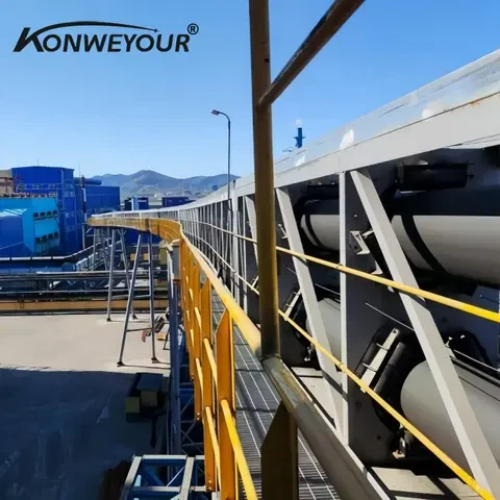
Overland belt conveyors offer numerous benefits over traditional material transport methods. These advantages make them an attractive option for industries involved in large-scale bulk material handling.
One of the most significant advantages of overland belt conveyors is their cost-efficiency. Overland conveyors reduce the need for manual labor, fuel, and maintenance costs when compared to truck transport and other traditional methods.
Lower Fuel Costs: Overland conveyors are often powered by electricity, which is more cost-effective than fuel-powered trucks.
Reduced Labor Costs: By automating material transport, overland conveyors reduce the need for human labor, lowering wage expenses and increasing overall cost savings.
Cost Factor | Overland Belt Conveyor | Traditional Transport Methods |
Fuel Costs | Reduced, uses electricity | High, fuel-dependent |
Labor Costs | Lower, due to automation | High, relies on manual labor |
Maintenance Costs | Lower, fewer moving parts | Higher, requires frequent repairs and upkeep |
Overland belt conveyors are designed to be energy-efficient, using optimized motors and drive systems to reduce power consumption. This energy efficiency makes them a more sustainable choice compared to fuel-powered trucks.
Electric Power: Overland conveyors are often powered by electricity, which is more energy-efficient and environmentally friendly compared to diesel-powered trucks.
Regenerative Drives: Many modern overland conveyors feature regenerative drive systems, which capture excess energy from the system and feed it back into the grid.
Overland belt conveyors contribute to environmental sustainability by reducing the environmental impact of material transport. Unlike trucks, which produce emissions and consume large amounts of fuel, overland conveyors produce fewer emissions and help reduce air and noise pollution.
Lower Carbon Footprint: Overland conveyors reduce the need for diesel-powered trucks, cutting down on emissions and fuel consumption.
Noise and Dust Reduction: Overland conveyors generate less noise and dust, improving air quality and making working conditions safer for employees.
Overland belt conveyors are designed to transport materials over long distances, making them an ideal solution for industries that require large-scale bulk material handling. These conveyors offer a more efficient and reliable method of transport compared to traditional systems like trucks or loaders.
Overland belt conveyors are specifically designed to handle long-distance transport, with the ability to span several kilometers. This makes them ideal for applications such as transporting materials from remote mining sites to processing plants or moving materials across large construction sites.
Extended Reach: Overland conveyors can be customized to span distances of up to 20 kilometers or more, reducing the need for intermediate handling or transfer points.
Efficient Transport: Overland belt conveyors provide a continuous flow of material, ensuring that materials are transported efficiently over long distances.
Overland belt conveyors are highly adaptable to different terrains, allowing them to be used in areas where traditional transport methods may be impractical. Whether crossing hills, valleys, or uneven terrain, overland conveyors can be designed to navigate complex landscapes.
Inclines and Declines: Overland conveyors can be designed to handle steep inclines or declines, ensuring that materials are transported smoothly even on challenging terrain.
Curves and Elevation Changes: Overland conveyors can be designed to navigate curves and elevation changes, making them suitable for sites with varying terrain.
Overland belt conveyors offer high levels of customization, making them suitable for a wide range of applications. Whether the conveyor needs to be extended over long distances, customized for specific materials, or adapted to changing site conditions, overland conveyors provide the flexibility needed for modern industrial operations.
Overland belt conveyors can be designed to meet the specific needs of a project, including adjustments to length, route, and layout. This customization ensures that the conveyor system fits seamlessly into the site’s infrastructure.
Length: The conveyor can be designed to span long distances, depending on the site’s needs.
Route: The route can be customized to navigate around obstacles and adapt to the site’s topography.
Belt Material: Different types of belts can be used depending on the material being transported, such as abrasion-resistant belts for heavy materials.
Overland belt conveyors can be integrated with other material handling systems, such as crushers, screeners, and stackers, creating a fully automated and efficient system.
Automated Systems: Overland conveyors can be connected to other systems to create a fully automated material handling process.
Scalability: Overland conveyors can be scaled to meet the growing demands of a project, with the ability to add or modify components as necessary.
Customization Feature | Overland Belt Conveyor | Traditional Transport Systems |
Length | Customizable for long distances | Limited by transport vehicle capacity |
Route | Can be adapted to different terrains and obstacles | Difficult to modify route |
Belt Material | Customizable for different materials | Limited by vehicle or equipment specifications |
Overland belt conveyors are designed for durability and long-term operation. With regular maintenance and care, these systems can operate efficiently for many years.
Regular maintenance is essential to ensure the longevity and reliability of overland belt conveyors. Some of the common maintenance tasks include inspecting belts for wear and tear, checking the alignment of pulleys and idlers, and ensuring the motors and drive systems are functioning properly.
Belt Inspections: Routine checks are necessary to ensure the belt remains in good condition and free from damage.
Pulley and Idler Maintenance: Pulleys and idlers should be inspected regularly to ensure proper alignment and prevent damage to the belt.
Motor and Drive System Checks: Motors and drives should be checked to ensure efficient operation and prevent failures.
Overland belt conveyors are essential in the bulk material handling industry, offering a highly efficient, cost-effective, and environmentally friendly solution for transporting materials over long distances. With their ability to handle large volumes of materials, these conveyors are particularly beneficial for industries like mining, cement production, and large-scale construction projects. Their customizable design, energy-efficient operation, and low maintenance requirements make them a reliable and sustainable choice for improving material transport efficiency.
At Hebei Konweyour Import and Export Co., Ltd., we specialize in providing high-quality overland belt conveyors that are tailored to meet the specific needs of your operation. Our conveyors are designed to enhance operational efficiency, reduce costs, and support environmentally sustainable practices.
We invite you to contact us to learn more about how our overland belt conveyors can optimize your material handling processes. Our team is ready to provide expert guidance and customized solutions to help you achieve your business goals.
Q1: What is the primary function of an overland belt conveyor?
A1: The primary function of an overland belt conveyor is to transport bulk materials efficiently over long distances, reducing the need for manual labor and improving operational flow.
Q2: How do overland belt conveyors save costs?
A2: Overland belt conveyors reduce costs by eliminating the need for truck transport, which lowers fuel and labor expenses. They also ensure continuous operation, minimizing downtime and increasing productivity.
Q3: What materials can be transported using overland belt conveyors?
A3: Overland belt conveyors can transport a wide range of materials, including coal, ore, sand, gravel, and other bulk materials.
Q4: How energy-efficient are overland belt conveyors?
A4: Overland belt conveyors are designed with energy-efficient components, reducing power consumption compared to diesel-powered trucks. They are often powered by electricity, which is more cost-effective and sustainable.
Q5: How are overland belt conveyors customized for different terrains?
A5: Overland belt conveyors can be designed to navigate uneven terrain, slopes, and long distances, ensuring efficient material transport in challenging conditions. They can also be adapted to specific material types, environmental factors, and project requirements.


